2026 Snyder Lecture
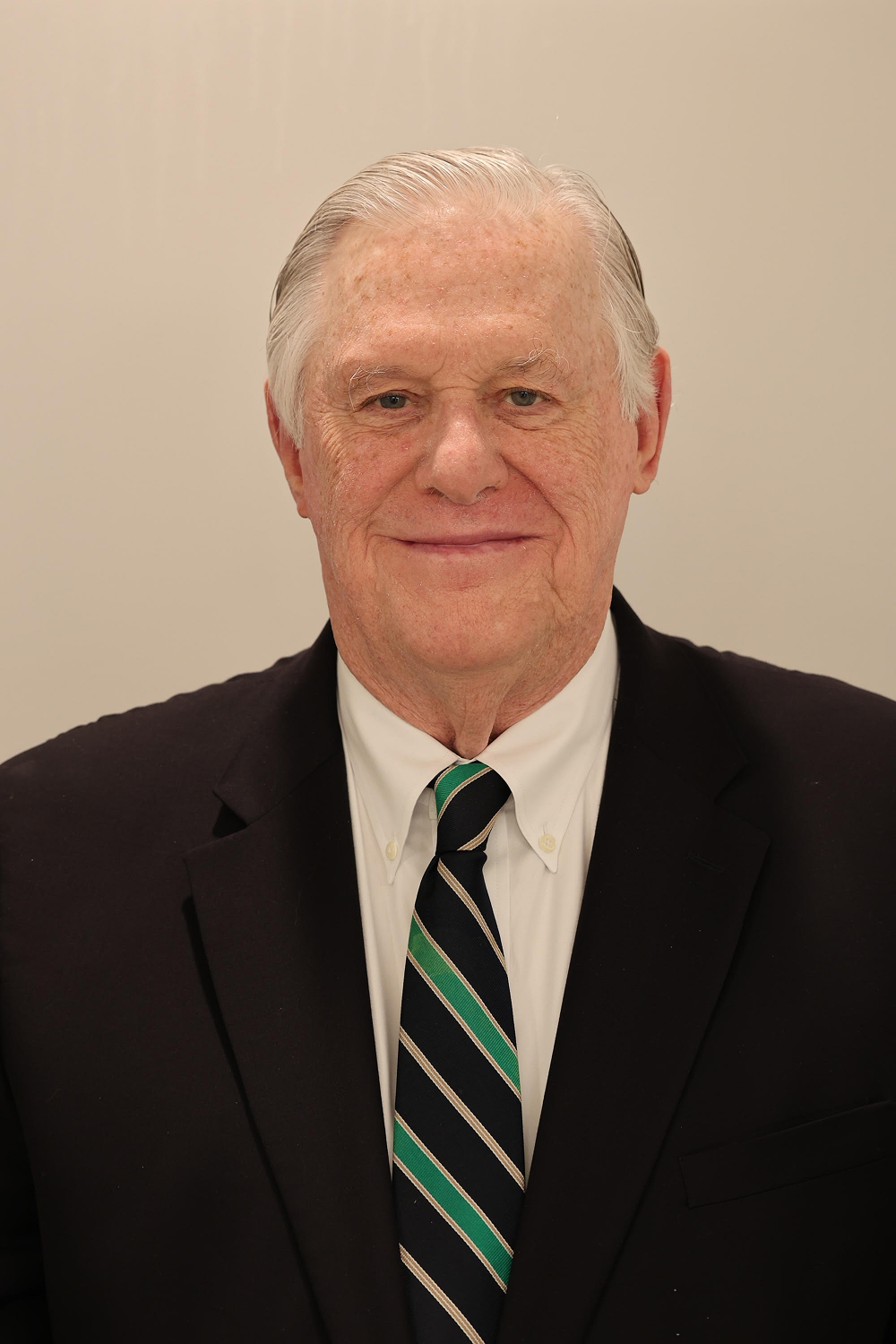
The 2026 Snyder Lecture will be presented by John D. Bullock, MD, MPH, MSc.
Dr. Bullock’s Biography
Dr. John D. Bullock is a forensic medical historian who was previously an ophthalmologist, microbiologist, and infectious disease epidemiologist. He held a clinical faculty position at Stanford before coming to Wright State University in Dayton, Ohio, where he served as Professor and Chair of the Department of Ophthalmology, Associate Professor of Microbiology and Immunology, Professor of Mathematics and Statistics, Professor of Physiology and Biophysics, Clinical Professor of Community Health, Clinical Professor of Population and Public Health Sciences, and was named the Brage Golding Distinguished Professor of Research. He also served as a Lecturer in Law and Medicine at the University of Dayton’s School of Law.
He is a graduate of Dartmouth College, Dartmouth Medical School, and Harvard Medical School. He completed an internship in internal medicine at Washington University in St. Louis before serving as a medical officer in the United States Navy. After residency training in ophthalmology (and plastic surgery) at Yale, he completed fellowships at the University of California, San Francisco, and the Mayo Clinic. He received a Master of Science degree in Microbiology and Immunology from Wright State and a Master of Public Health degree (emphasizing quantitative epidemiology) from the Harvard School of Public Health. He also completed additional training from the Armed Forces Institute of Pathology, the Centers for Disease Control and Prevention, the London School of Hygiene and Tropical Medicine, and the Pasteur Institute in Paris.
He is the author/co-author of more than 260 scientific publications, predominantly related to infectious diseases, trauma, and medical history. He has given over 500 lectures throughout the world. He discovered three new causes of blindness and elucidated the etiology and/or description of ten different retinal disorders. Dr. Bullock (and co-workers) investigated a worldwide epidemic of infectious blindness which they traced to an improperly bottled and stored over-the-counter contact lens solution. Their subsequent ten peer-reviewed research papers (including one in the New England Journal of Medicine) documented that, at high temperatures, the plastic containers absorbed the solution's preservative, allowing microbial growth, leading to ocular infections, visual impairment, and blindness from Fusarium keratitis.
He served on the editorial boards of numerous journals, including Nature [Scientific Reports/Public Health], was a manuscript reviewer for over 45 journals, and President and Secretary/Treasurer of two international medical societies. He served as an Associate Board Examiner for the American Board of Ophthalmology and a member of the Board of Governors of the American Osler Society.
His current research interests relate to the histories of ophthalmology and medicine. His historical publications have included investigations of the blindnesses of Louis Braille, Dom Perignon (the credited inventor of champagne), the Biblical St. Paul, and Leonhard Euler (the Swiss genius honored by 96 eponymous mathematical terms). He published new theories to explain: the origin of the anthrax spores during the sixth plague of Egypt; the first (probable) use of streptomycin for tuberculosis; and the genetic predisposition of the Wright Brothers to typhoid fever.
He was awarded: membership in AOA and Delta Omega (the Honorary Society of Public Health); a Heed Fellowship; the Marvin Quickert, Merrill J. Reeh, and Wendell Hughes Awards from the American Society of Ophthalmic Plastic and Reconstructive Surgery; the Outstanding Scientific Project Award from the American Public Health Association; and a Distinguished Career Achievement Award from the Dartmouth-Geisel School of Medicine. He has been recognized as “One of Ohio’s Finest Citizens” by the Ohio House of Representatives.
As a third-year medical student in 1967, Bullock met Dr. Cogan who helped him publish his first ophthalmology paper, “Auto-ophthalmoscopy.” He joined the Cogan Society in 1990 and currently serves on the Executive Committee. He has been married to Gretchen for 60 years; they have two sons, a daughter, and five grandchildren and currently live in a retirement community outside of Boston.
OCULAR-RELATED IATROGENIC DISORDERS
Iatrogenic causes are defined as diverse factors arising from any medical activity, intervention, treatment, or advice that result in an unintended and adverse outcome for the patient, such as a new illness, injury, recurrence, or complication. A disorder signifies a deviation from the usual or healthy state.
The therapeutic use of bloodletting had been a common medical practice since antiquity, first appearing in Egypt, as described by the Ebers papyrus, circa 1550 BCE. The concept that illness resulted from an imbalance of the four bodily humors is traditionally attributed to Hippocrates (c.460-c.370 BCE) who recommended therapeutic phlebotomy for the treatment of various systemic conditions including apoplexy, headaches, pneumonia, seizures, and others. Overzealous blood loss, however, can result in blindness. Hippocrates has been credited with the admonition First Do No Harm.
Paracelsus (1493-1541), the Swiss physician and alchemist who pioneered the therapeutic use of chemicals in medicine, objected to excessive bloodletting, believing that the process disturbed the harmony of the body’s system and that blood could not be purified by merely decreasing its volume. Paracelsus recommended the administration of highly specific medicines, and he treated a variety of diseases with orally administered chemicals, including mercury, arsenic, and lead; all three of these elements are now well-known to cause toxic oculopathies. Paracelsus stated: Solely the dose (of a medication) determines that a thing is not a poison.
The Athenian scholar and Hippocratic contemporary, Socrates (469-399 BCE), was the earliest philosopher who recognized error as something he himself actively caused; he made that recognition a core of his philosophical method.
During my 2026 Snyder lecture, I will propose that Hippocrates and Paracelsus were the first physicians to recognize ocular-related iatrogenic disorders (ORID’s) because they, most likely, had caused or observed them. I will also elaborate my 57-year ophthalmological experience involving numerous other instances of ORID’s with which I am highly familiar. These ORID’s encompass those resulting from systemic or ocular treatments/procedures/advice as well as systemic disorders resulting from ocular therapies or procedures. They include disorders associated with ophthalmic and non-ophthalmic surgery, dental procedures, blood transfusions, local and general anesthesia, radiation therapy, medications (including eye drops), diagnostic testing, and medical advice, among others. It is hoped that a knowledge of this topic will prevent or mitigate future disabilities associated with ocular and medical treatments and procedures.
Page last updated January 22, 2026